A white wall in a north-facing living room, an entryway too narrow to hang a piece of furniture, a rented hallway where drilling is prohibited: wall decoration often starts with a constraint. Decorating your walls with style and personality begins with addressing these concrete situations before thinking about inspiration.
Textured Walls and Coatings: Wall Decor that Replaces Paint
The most prominent trend in wall decoration focuses on textured surfaces. Lime-based coatings, wooden paneling, reconstituted stone, or troweled plaster: we are no longer just looking for a color, but a material that reacts to light.
On a living room wall exposed to natural light, a stone-effect coating creates shadows that change throughout the day. The effect is more vibrant than a flat matte paint, and a textured coating hides wall imperfections without requiring perfect leveling.
Wooden slat wall panels work well behind a sofa or a headboard. They add depth without heavy work, as most are fixed to an adhesive backing. For a cohesive look, stick to an earthy palette (beige, clay, sand) rather than stark contrasts. This choice aligns with warm minimalism, which favors warm tones and raw materials over cold white walls.
If you are looking for wall coverings suitable for different interior styles, the catalog available at wallstore.be covers a wide range of finishes, from textured wallpapers to more contemporary solutions.
Customized Wall Decoration without Drilling: Solutions for Renters
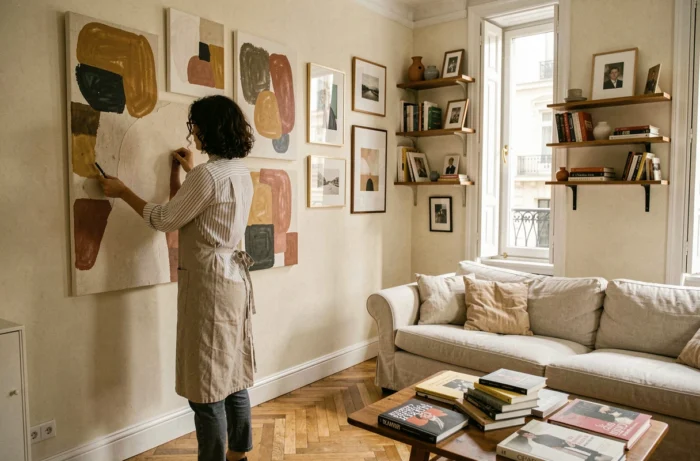
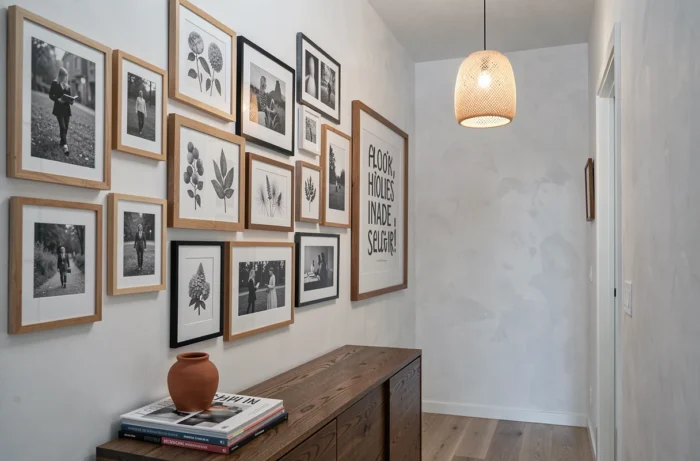
In rentals, the constraint is clear: no holes, no marks. Repositionable adhesive strips can now support frames weighing several kilos. You can create a complete gallery wall above a desk and remove everything at the end of the lease.
Creating a Frame Gallery without Mistakes
The classic mistake is hanging frames too high. The operational rule: the center of the main frame should be at eye level, which is between 150 and 160 cm from the floor. Start with this central frame and build around it.
- First, lay out your frames on the floor to test the composition before touching the wall, leaving a regular space between each piece (about the width of a hand)
- Mix formats (one large photo frame, two small ones, one illustration) to avoid a too-symmetrical catalog effect
- Incorporate an unframed element (round mirror, macramé object, small shelf) to break the grid and add volume
This approach works well in a narrow hallway as well as on a large living room wall. Feedback varies on the adhesive’s hold depending on the type of wall, but on a smooth and clean surface, the attachment remains reliable over time.
Panoramic Wallpaper: Transforming a Wall into a Focal Point
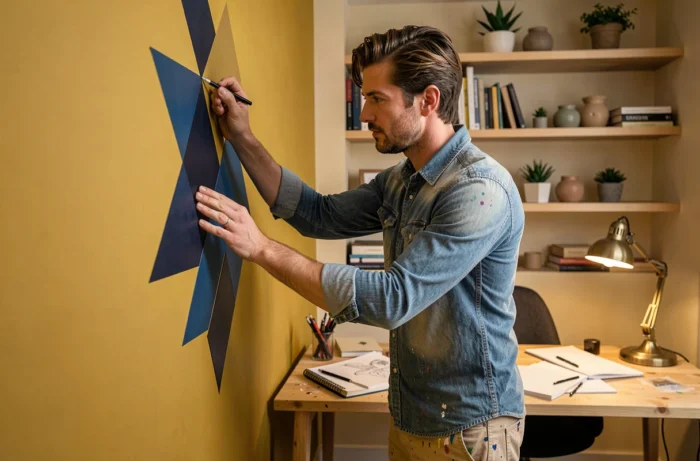
A single strip of panoramic wallpaper changes the perception of an entire room. In a bedroom, a botanical pattern behind the headboard adds depth without overwhelming the space. In a living room, an architectural panorama (arches, urban perspectives) visually elongates the wall.
Non-woven wallpaper is easier to install than traditional paper: you paste the wall, not the strip. The result is fewer bubbles and the possibility of repositioning in the first few minutes. For original wall decor, prioritize a pattern on one wall and keep the other walls neutral.
Choosing Durable and Healthy Wallpaper
The issue of indoor air quality is increasingly influencing the choice of wall coverings. Wallpapers certified for low volatile organic compounds emissions better protect health, especially in a bedroom or poorly ventilated space.
Low-carbon materials are becoming a selection criterion, not just a marketing argument. Wallpaper made from natural fibers (linen, cellulose) without solvents represents both an aesthetic and responsible choice. Check the labels on the packaging: European environmental labels remain the most reliable reference.
Mirrors and Decorative Wall Objects: Creating Volume in a Small Space
In an entryway of less than four square meters, a good-sized round mirror placed facing the light source visually doubles the space. This is the most effective solution even before considering the wall colors.
Pairing a mirror with a wall sconce creates a light point that structures the room. Avoid mirrors that are too small lost on a large wall: a single generously sized mirror has more impact than three small ones scattered around.
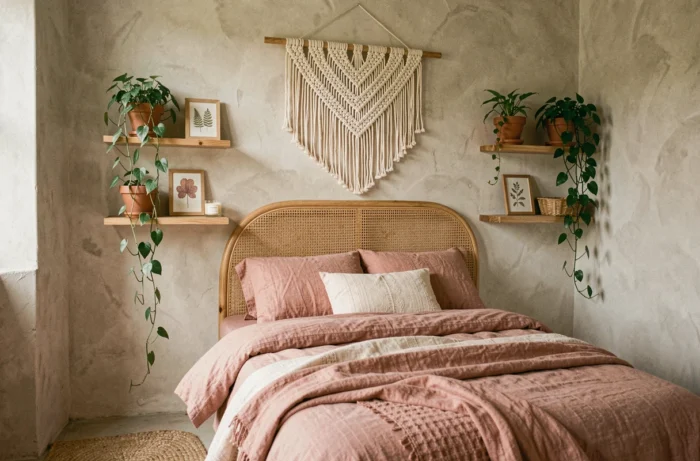
Open wall shelves also serve as decoration. A few well-chosen objects (a plant, a book, a ceramic vase) are enough to give character. The idea is not to fill but to create micro-compositions that attract the eye without weighing down the room.
- A round or organic mirror in the entryway or hallway to visually enlarge the space
- A thin black metal shelf in the living room to display a few objects without drilling multiple holes
- Terracotta or handmade ceramic plates arranged in a staggered pattern to replace a classic painting
Decorating your walls with personality does not require a substantial budget or advanced DIY skills. A textured coating, a well-composed frame gallery, or a panoramic wallpaper on a single wall is enough to transform an interior. The choice of healthy and durable materials adds a practical dimension that goes beyond mere aesthetics, and this is probably the criterion that will make a difference in the long run.