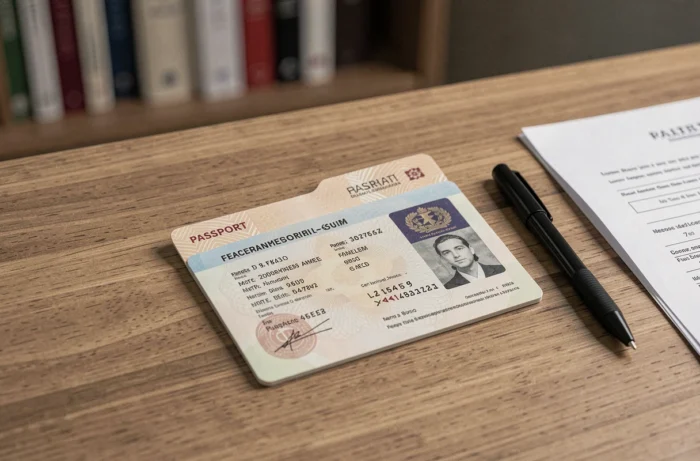
An expired passport found in a drawer, a page torn out by a child, a visa stamp that one would like to keep as a souvenir: these situations all raise the same question. Can you handle your passport without risking trouble with the French administration? The answer depends on what is meant by “handle” and the status of the document at the time of the incident.
Tearing a page from a passport: an offense even on an expired document
You may have considered removing a damaged or unnecessary page from your passport. This is a very bad idea, regardless of the state of the document.
Removing a page renders the passport immediately invalid. The booklet is designed as a whole: cover, personal data pages, blank pages for visas and stamps. Each page is numbered and integrated into the electronic chip on biometric passports. Removing a single sheet breaks this coherence.
On a valid passport, the intentional alteration of the document is considered a degradation of an official title. In practice, a border control with an incomplete passport results in a boarding refusal or a prohibition of passage. No agent will seek to verify whether the missing page contained information or not.
The question of whether it is possible to remove or keep a page from a passport regularly comes up in traveler forums, and the legal answer remains consistent: the document must not undergo any physical modification by its holder.

Expired passport: what French law really allows
Contrary to popular belief, no text requires the return of an expired passport. Most expired passports remain with their holders without the administration claiming them.
Keeping an old passport is therefore perfectly legal. Several practical reasons justify this:
- The document contains travel stamps that serve as proof of stay for certain administrative or tax procedures.
- A still-valid visa may be in an expired passport, and some countries accept the simultaneous presentation of the old and new passports.
- The personal data (number, date of issue, place) can be useful for filling out subsequent consular forms.
On the other hand, using an expired passport as an identity document is prohibited. It cannot be used for a flight, to open a bank account, or to verify one’s identity with law enforcement.
Passport renewal and return of the old one: the friction point
It is at the time of renewal that the situation becomes complicated. When picking up the new passport at the town hall, the old document must in principle be returned to the agent. The administration invalidates it by perforating it or cutting a corner, and sometimes returns it to the holder.
The exception of the valid visa
Do you have an active visa in your old passport? This is the only scenario where keeping the complete document is not only tolerated but recommended by consular services. You must then report the situation at the counter when picking up the new title.
Some countries (notably the United States and the United Kingdom) accept that the traveler presents both the old passport bearing the visa and the new valid passport simultaneously. Without the intact old document, the visa loses its physical support and may become unusable according to the rules of the issuing country.
Special case: asylum seekers and refugees
Since March 2026, OFPRA no longer keeps the original passports sent by mail. Asylum seekers now present their documents during the interview and retrieve them immediately afterward.
The refugee physically retains their national passport but cannot use it to return to their country of origin. This is a particular legal situation where keeping the title does not equate to permission to use it.
Personal data from the passport: what remains usable after expiration
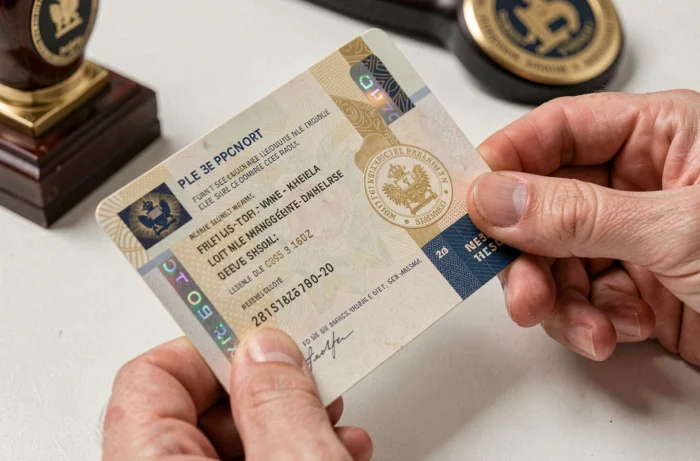
A passport contains much more than the holder’s name and photo. The document number, date of issue, place of application, and biometric information stored in the chip remain personal data under French law.
Why does this matter? Because the destruction of an expired passport is not trivial either. Throwing a passport in a regular trash bin exposes one to the risk of identity theft. The information readable on the data page (name, date of birth, number) is sufficient to fuel attempts at fraud.
If you decide to dispose of an old passport, there are two reasonable options:
- Return it to the town hall for secure destruction during renewal.
- Destroy it yourself by cutting the personal data page and the electronic chip (located in the back cover on French biometric models).
- Keep the document in a secure place, like any other sensitive identity title.
Never throw an intact passport in a regular trash bin. This precaution applies equally to expired passports and invalidated documents returned by the administration.
The passport remains a property title of the state, even in the hands of its holder. This legal nuance explains why one can keep it without modifying it, but never transform it, partially cut it, or extract pages for personal use. The rule can be summed up in one sentence: keep yes, alter no.