
A quarterly magazine devoted to emerging music scenes, printed in just a few thousand copies, struggles to find a retailer in a town of fewer than 30,000 people. The national distributor prioritizes high-circulation titles, while local bookshops have limited shelf space. This situation sums up a structural problem that independent cultural publications face every day, long before questions of algorithms or editorial consolidation come into play.
Physical distribution and independent cultural publications: the bottleneck
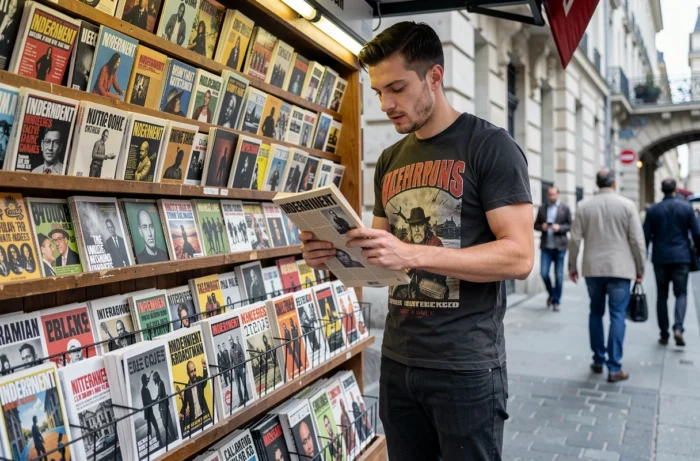
There is plenty of talk about digital visibility, but print distribution remains a tangible barrier. Newsstand distribution networks operate on a volume-based model: the smaller the print run, the less likely a title is to be stocked outside major urban areas.
For a cultural magazine covering theater, arthouse cinema or local heritage, access to readers in rural areas depends on the physical distribution network. Yet that network has shrunk in recent years, with newsstands and press shops closing regularly. As a result, readers in a mid-sized regional capital often cannot access the same titles as someone in Paris.
Some editorial teams get around this obstacle by expanding postal subscriptions or partnering with independent bookshops. Others rely on consignment sales at cultural venues such as arthouse cinemas, media libraries and performance spaces. These short distribution channels, exemplified by publications such as revue-bancal.fr, help maintain a direct connection between editorial teams and their readers without going through traditional intermediaries.
Funding independent media: beyond the advertising model
Most independent cultural publications cannot rely on advertising as their main source of revenue. Advertisers concentrate their budgets on high-traffic sites, while programmatic ad networks favor content with a large audience.
This has led to a shift toward hybrid models:
- Paid subscriptions (print, digital or both), which depend on a community of loyal readers willing to fund specialized editorial work
- One-off or recurring crowdfunding through dedicated platforms, to launch a special issue or cover an in-depth topic
- Public funding, particularly the fund for social and local news media, which may support websites, newsletters, web TV channels and online radio stations
Public support is shifting toward more direct recognition of editorial work. According to Stratégies, extending this approach to national daily newspapers is planned for 2027. For independent publications, this change in criteria could alter how funding is allocated by rewarding the content produced rather than circulation alone.
This business model remains fragile. The viability of an independent cultural magazine varies considerably depending on its publication schedule, the size of its editorial team and its ability to build reader loyalty over the long term.
Algorithms and cultural news online: what limits visibility
Online, independent cultural media face a different kind of filter. Search engine and social media algorithms favor content that drives high engagement (shares, comments and time spent). An in-depth article about a regional dance company generates fewer interactions than a celebrity controversy.
The online visibility of independent media depends on criteria that do not measure editorial quality. Small cultural news teams lack both the resources to optimize every piece of content for search and the capacity to publish at the pace demanded by platforms.
Artificial intelligence adds another layer of complexity. Policy proposals are emerging around sharing the value generated between press publishers and companies that use their content to train AI models. For now, this is an ongoing debate, not a rule in force, but it directly affects small editorial teams whose articles may be scraped without compensation.

Independent press beyond major cities: accessibility and local reach
Geographic accessibility is not just a logistical issue. It also affects the content itself. Independent cultural editorial teams often cover subjects that national media overlook: small-scale festivals, artist residencies in rural areas, local architectural heritage and niche music scenes.
This on-the-ground reporting is especially valuable to readers far from major cities. When an independent publication disappears or is no longer distributed in a particular area, an entire part of local cultural news loses its coverage.
A few practical measures can help maintain this local reach:
- Partnerships with municipal media libraries, which can offer institutional subscriptions and make publications freely available
- Digital editions available without an expensive subscription, sometimes funded by local authorities
- Collaborations between independent publications to pool distribution, share local correspondents or co-produce themed features
Digital media cannot replace the physical presence of a publication in a place people pass through. A copy left on the table at a media library or cultural café reaches people who would not have sought out the same content online. For these editorial teams, combining channels remains essential.
Independent cultural publications are fighting for more than their economic survival. They are defending access to cultural information that is not filtered by the size of the advertising market or the reader’s location. As long as editorial teams continue to produce rigorous content and find ways to circulate it, they preserve a form of pluralism that large media groups cannot offer.